
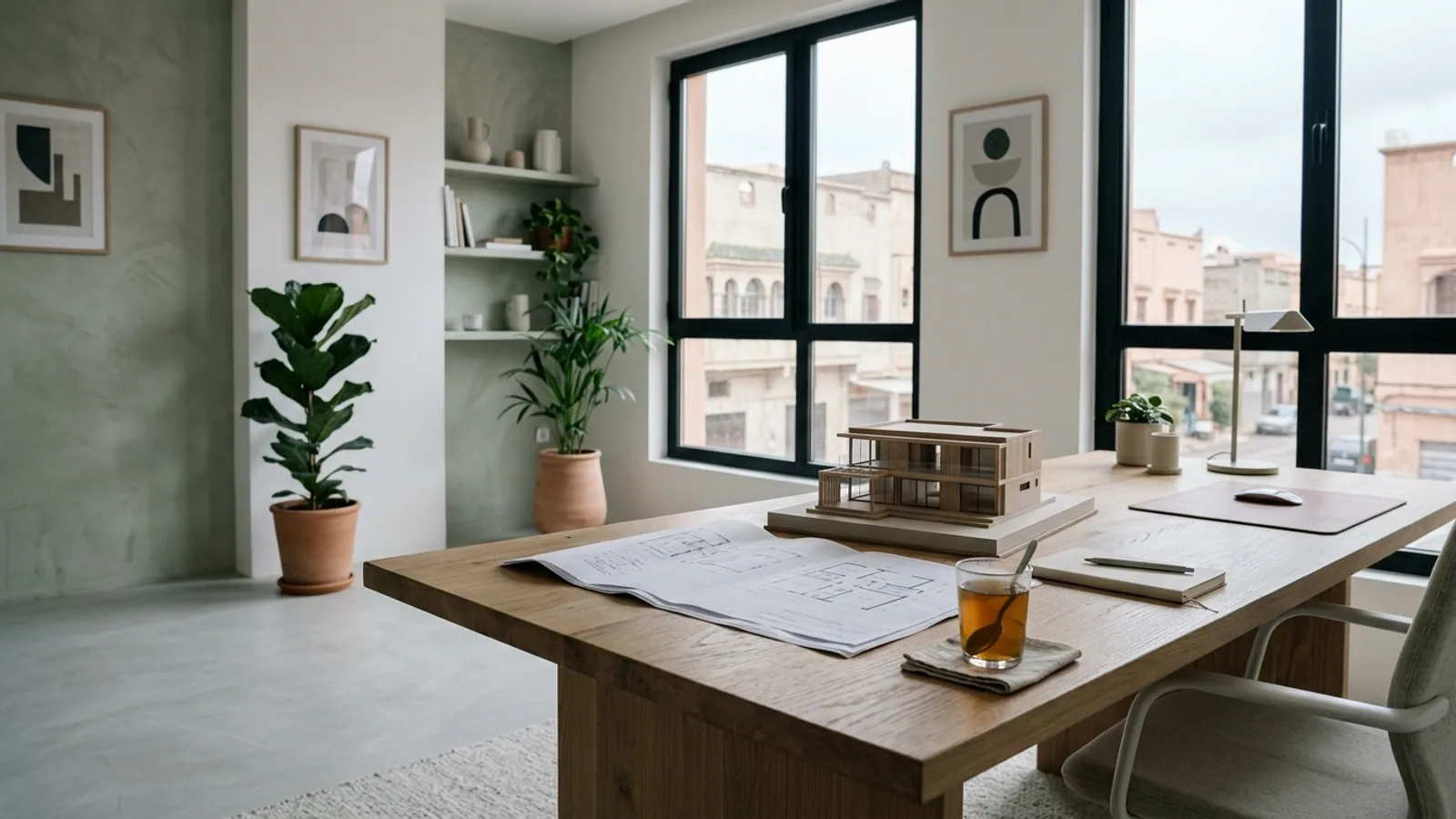
A beautiful plot is not enough. What matters is its ability to accommodate your actual project. Many buyers decide based on the view, the facade, or the price, only to discover too late a zoning rule, insufficient access, complicated soil, or incomplete land documentation. The right reflex is to check the plot with your program in mind, before signing a preliminary agreement or making a purchase. At Art & Architecture, this is often where the most costly mistakes are avoided.
Define Your Project Before Visiting a Plot
Do not look for a plot with a vague idea. Look for a plot for a specific project. Even if the plans are not yet drawn, you need to know what you want to build.
First, outline your essential needs. Villa or compact house. Small apartment building or family home. Desired number of floors. Need for a garden. Space for one or several cars. Desire for a pool. Distance from neighbors. Orientation of living spaces. This framework helps you filter parcels from the very first visit.
A plot may look large enough on paper but remain unsuitable in reality. The shape of the parcel, its frontage, depth, and boundaries change a lot. A project with parking, courtyard, garden, and good positioning requires more than just total surface area.
Before going further, make a short list of priorities:
- what is essential, for example the number of floors or parking,
- what is desirable, for example a garden or a pool,
- what is negotiable, for example the size of a terrace or the location of a laundry room.
This sorting prevents buying an appealing plot that is incompatible with your lifestyle.
Check Zoning and Buildability of the Parcel
This is the most important check. Before any decision, compare the plot against the applicable zoning documents. In Morocco, these include the development plan and the zoning plan. These documents define the area's designation, sectors where construction may be prohibited, and land use rules. In the absence of certain documents, compatibility with the master urban development plan must still be verified.
Concretely, you must request urban planning information from the municipality or the competent urban agency. Do not settle for a simple "you can build here." Present your actual project, even in a simple way, house, villa, or small apartment building, with the planned number of floors, parking needs, garden, and pool if planned.
The goal is clear: to know if the parcel truly accommodates your program. In particular, check:
- the zone's designation,
- the rules on height, footprint, and positioning,
- setbacks from the road and boundaries,
- any easements,
- the feasibility of a building permit.
Never assume a plot is buildable because neighbors have built next door. Rules can vary from one parcel to another. A quick reading of the local regulations can already change your decision.
Check Access, Utilities, and Easements
A plot may be buildable in theory but difficult to exploit in practice. First, look at access. Access must be clear, legal, and usable. A passage tolerated by habit does not equal a secure situation. Verify the plot's relationship to the public road and the reality of the service road.
Then look at utilities. Water, electricity, sewage, stormwater drainage, roads. Their presence, proximity, or absence influence the cost and sometimes even the project's design. A poorly serviced plot may require heavy technical adaptations.
Be attentive to easements. Some limit the use of part of the parcel or complicate the building's positioning. They may involve a passage, a utility, a constraint related to the neighborhood or immediate environment. If a point is unclear, request a written verification or have the file reviewed before committing.
A site visit helps a lot. Look at the actual road, the plot's levels, existing manholes, poles, party walls, and the natural flow direction of rainwater.
Evaluate the Soil, Slope, and Technical Constraints
The plot is not just its surface area. Its technical behavior matters just as much. A steep slope, old fill, unstable soil, or the presence of water can completely change the project.
Start with simple observations. Is the plot flat or uneven? Does water stagnate after rain? Are there visible cracks on neighboring walls? Does the plot seem filled? Are neighboring parcels higher or lower? The immediate environment often gives good clues.
The slope can be interesting for the view or the organization of levels, but it sometimes complicates foundations, access, retaining walls, and water drainage. The soil type directly influences structural solutions. If there is any doubt, it is better to seek technical advice tailored to the plot and the planned project.
Also think about future comfort. Orientation, sunlight, overlooking, traffic noise, neighboring activity, prevailing winds. A legally buildable plot can still be unpleasant to live in if these points are neglected.
Documents to Request Before Any Commitment
Never buy based on an oral promise. Request a minimum file and take the time to read it. If possible, have it reviewed by a professional. You can request design and feasibility verification support to compare the parcel to your project before signing.
Useful documents to gather include:
- the land title or available ownership documents,
- a location plan and a parcel plan,
- information on the plot's actual boundaries,
- boundary marking elements if the issue exists or if doubt arises,
- urban planning information obtained from the municipality or urban agency,
- any document mentioning an easement, a passage, or a particular constraint.
Always compare the documents with the actual plot. A difference in boundaries, a poorly defined access, or a frontage supposedly wider than on site should alert you immediately. If necessary, request clarification before any commitment.
Costly Mistakes After Purchase
The first mistake is to buy first and then ask questions later. This is the best way to discover too late that a planned floor is not allowed, that a setback reduces your footprint, or that access is not legally secure.
The second mistake is to think only in terms of surface area. A larger plot is not always simpler. Its shape, slope, easements, and utilities matter as much as its size.
The third mistake is to ignore the technical budget. Difficult soil, extensive earthworks, retaining walls, or complex connections can weigh down the construction well before finishing touches.
The fourth mistake is to believe that a seller, neighbor, or intermediary replaces an official verification. Only information obtained from the competent authorities and reading the plot's documents truly protect you.
The right reflex remains simple. Before any signature, have everything checked by an architect. An outside perspective connects the plot to the project, identifies obstacles, and helps you decide with full knowledge. If you have doubts about a parcel, you can have your file reviewed before purchase. A few timely checks often prevent a bad plot, a bad plan, and a bad start.